Tomiwa Famodu
Data Science | GIS | Policy Analysis | Transit

A Little About Me.
Currently I’m a professional data scientist focused on providing equity based and data informed policy change.
After graduating from Haverford College in 2018 with a degree in Economics I worked for Gordian Sightlines where I worked on developing higher education needs based budgets for maintaining facilities on their campuses.
After I worked for the Performance Management and Technology division of the Mayors' Office of Children and Families in Philadelphia. Where I supported the expansion of multiple DHS funded programs and built several spatial analytic tools. While working for the City of Philadelphia I completed a Masters in Social Policy and Data Analytics from the University of Pennsylvania
Currently I work for the MBTA’s Lean Strategy Department. A unit housed within operations used to manage multiple high stakes projects within the organization. I have worked with MBTA leadership to create workforce management models from the perspective of headcount management and fatigue management and have built dashboards used to manage the payment processor of all MBTA fares.
Previous Work:
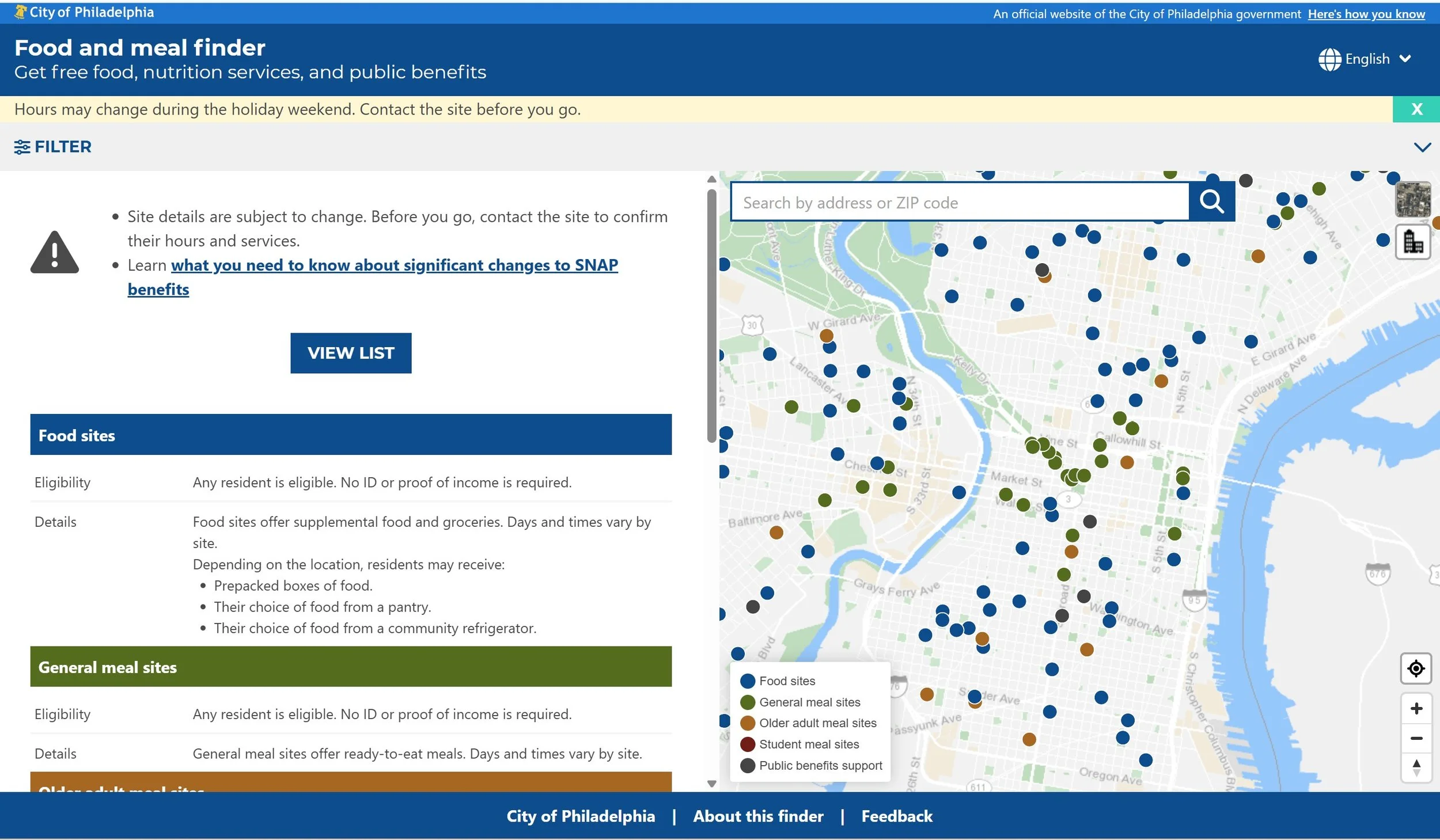
Previously I worked for the Performance Management and Technology division of the Mayors' Office of Children and Families in Philadelphia. There I supported the office in supporting the development of logic models, streamlining reporting functions via business intelligence, and creating interactive mapping applications.
See the phila.gov/food site here.
As a part of the PMT I was the primary technical lead in charge of reporting for both the PHLpreK initiative and the Community Schools Initiative. Leading the reporting used to justify and expand 70m dollar program.
As a part of my work at the City of Philadelphia I supported the development of SQL based reports that managed the current state of DHS programming within Philadelphia.
Proficiencies
Coding Languages
R | Python | SQL | GitHub
My coding proficiencies allow me to query, clean, and analyze data via a variety of methods. In R I have supported statistics driven research, automated lengthy excel based analysis, and developed an application used to automate the geocoding of multiple addresses. Within the City of Philadelphia I worked alongside the Office of Children and Families (OCF) to model demand for Adult Education Centers. See more within my GitHub page here
Business Intelligence Platforms
Tableau | Power BI | Cognos | ArcGIS Pro | ArcMap
I have used business intelligence software to build out dynamic reports and drive key decision making with business analytics. By combining my coding language proficiencies with business intelligence creating and updating dashboards becomes seamless. Currently my business intelligence knowledge is used by the MBTA to monitor the performance of Cubic’s 400m payment processing contract with the T.
Previously I worked on a research series where I examined the relationship between high traffic bus lines and changing racial demographics within Philadelphia to examine the equity impacts of expanding the Indego bike share program.
Policy Analysis & Business Processes
My main focus in social policy was in equitable transportation, food access, and economic development. Currently I have written policy briefs on equitable food access, the transit patterns of underserved communities, and equitable training practices of corporations which used logistic regression techniques to reinforce business decision making.
Within my current position at the MBTA I have become Lean Greenbelt certified and have since completed multiple business improvements that affect more than 5000 front-line employees including a revision to the canvassing process used to approve construction projects near the MBTA ROW.
In a recent final paper I utilized a Kaggle dataset to analyze the results of an intercompany push to train employees to become data scientists. In this paper I developed a profile of the types of candidates most likely to want to continue training as well as determine potential blind-spots within the data. This paper can be found on Medium here.